Pixels & Pedagogy
  • Pedagogy
  • About Me
  • Courses

Teaching Acts 3-4 of As You Like It with Puritan polemics against the theater and cross-dressing

5/19/2015

0 Comments


Picture
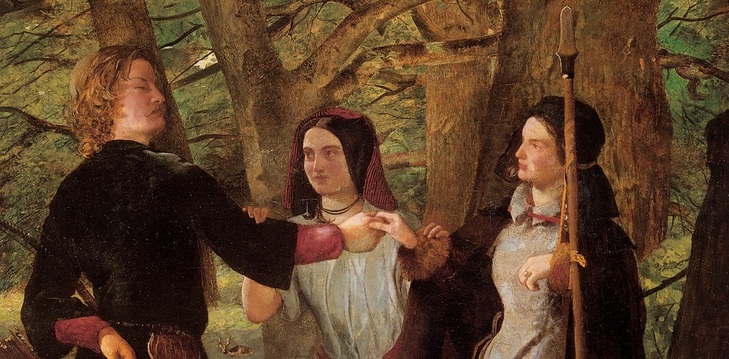
Detail from The Mock Marriage of Orlando and Rosalind from William Shakespeare's As You Like It (1852), by Walter Howell Deverell
As I mentioned in my earlier post about teaching Acts 1-2 of As You Like It, teaching the play in the context of early modern Puritan notions about the theater and cross-dressing can help students to denaturalize our culture's assumption that gender and sexuality are both natural and linked to each other. In Acts 3-4, we can see how such assumptions about the "natural" links between these topics can be particularly dangerous for women.

In teaching Acts 1-2 of the play, I like to pair Shakespeare with both Stubbes and Prynne. In Acts 3-4, we consider the following selections from Rainolds and Chamberlain:

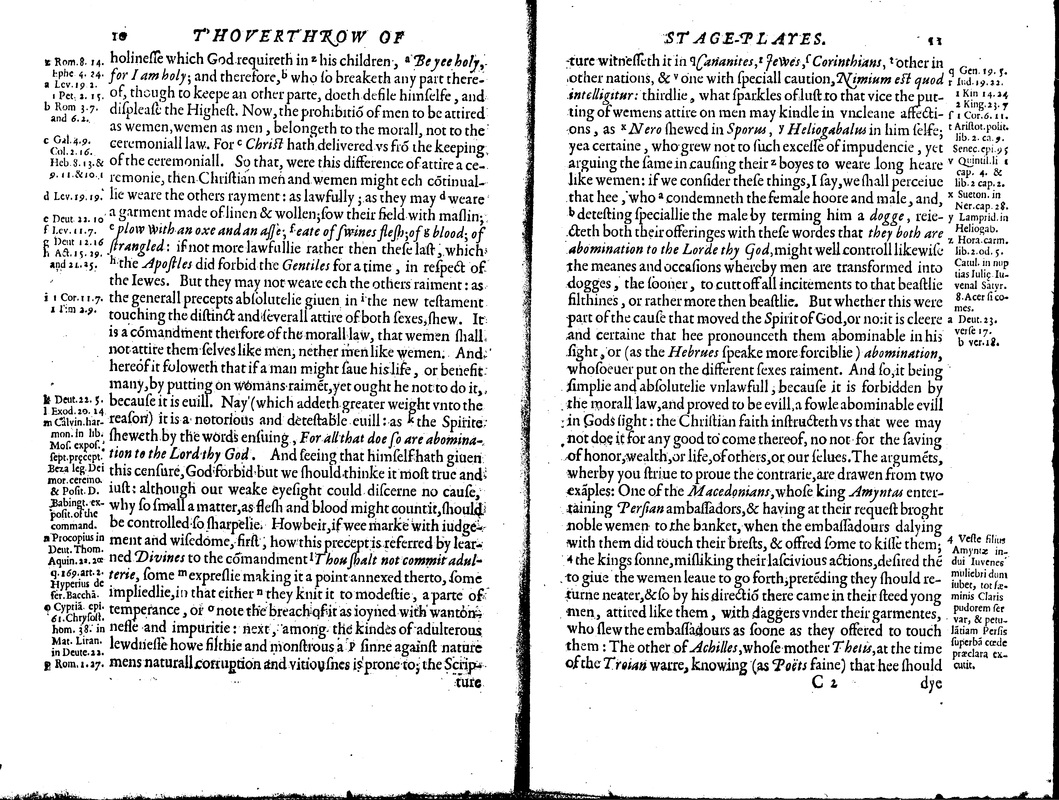
  • Section on the theater’s ability to provoke lust from John Rainolds’ The Overthrow of Stage Plays pp. 10-11 from EEBO
  • John Chamberlain’s letters from 1620 on the fad for women to wear masculine clothing in the Norton Critical Edition of The Roaring Girl, pp. 120-121
Picture
[A]lthough our weak eyesight could discern no cause, why so small a matter [biblical injunctions against cross-dressing], as flesh and blood might count it, should be controlled so sharply. Howbeit, if we mark with judgment and wisdom, first, how this precept is referred by learned Divines to the commandment, “Thou shalt not commit adultery,” some expressly making it a point annexed thereto, some impliedly in that either they knit it to modesty, a part of temperance, or note the breach of it as joined with wantonness and impurity… [Note] what sparkles of lust to that vice the putting of women’s attire on men may kindle in unclean affections. (Rainolds, 10)
As we saw before with Prynne and Stubbes, Rainolds raises the concern that the male boy actor in a woman's clothes will provoke "sparkles of lust."

The following set of questions are meant to tie our discussion of As You Like It with our sections earlier discussions of Twelfth Night:
  • In our discussion of Viola, we talked about the Cesario as being attractive because the character's female body was visible underneath her masculine disguise (especially when Orsino talks about Cesario's lips and voice being like a woman's). Are these Puritan authors suggesting that the same logic applies to boy actors dressed like women, or is the disguise itself what attracts?
  •  Do these authors imagine sexuality the way we imagine it today?
  • Does it matter that it’s a boy actor’s body underneath Rosalind's clothes? Does putting the boy actor back in gender-appropriate clothing control the lust of the audience or ramp it up more?

I then ask students to consider the poems that Orlando puts on the trees.
  • Why does Orlando put the verses on the trees?
  • What do you think of the poems? Are they good? Why or why not?—Consider both content and form
  • Compare and contrast Orlando and Silvius in the ways they conceptualize both the male experience of desire and women more generally.
  • How do these poems provoke in Rosalind a desire to “school” Orlando?
  • Is she expressing a similar frustration to what Phoebe says in the following passage:
Lie not, to say mine eyes are murderers.
Now show the wound mine eye hath made in thee.
Scratch thee but with a pin, and there remains
Some scar of it; lean upon a rush,
The
cicatrice and capable impressure
Thy palm some moment keeps; but now mine eyes,
Which I have darted at thee, hurt thee not;
Nor, I am sure, there is not force in eyes
That can do hurt. (3.5.19-27)
It is also worth it to compare and contrast Orlando and Touchstone. Both Touchstone and Silvius perform the role of a male lover through stereotypes. Touchstone plays the cynical lover and Silvius the idealizing lover, but both of them trade in stereotypes about women: that women are chaste virgins akin to goddesses (who murder men for loving them) or they are whores who haven't had the opportunity just yet to cuckold their husbands.
Amen. A man may, if he were of a fearful heart, stagger in this attempt [i.e., marriage] ; for here we have no temple but the wood, no assembly but horn-beasts. But what though? Courage! As horns are odious, they are necessary. It is said: 'Many a man knows no end of his goods.' Right! Many a man has good horns and knows no end of them. Well, that is the dowry of his wife; 'tis none of his  own getting. Horns? Even so. Poor men alone? No, no; the noblest deer hath them as huge as the rascal…As the ox hath his bow, sir, the horse his curb, and the falcon her bells, so man hath his desires; and as pigeons bill, so wedlock would be nibbling. (3.3-37-44, 61-3).

In Touchstone's words above, he suggests that it is inevitable that women will cuckold their husbands, but that male desire curbs men and forces them into marriage.

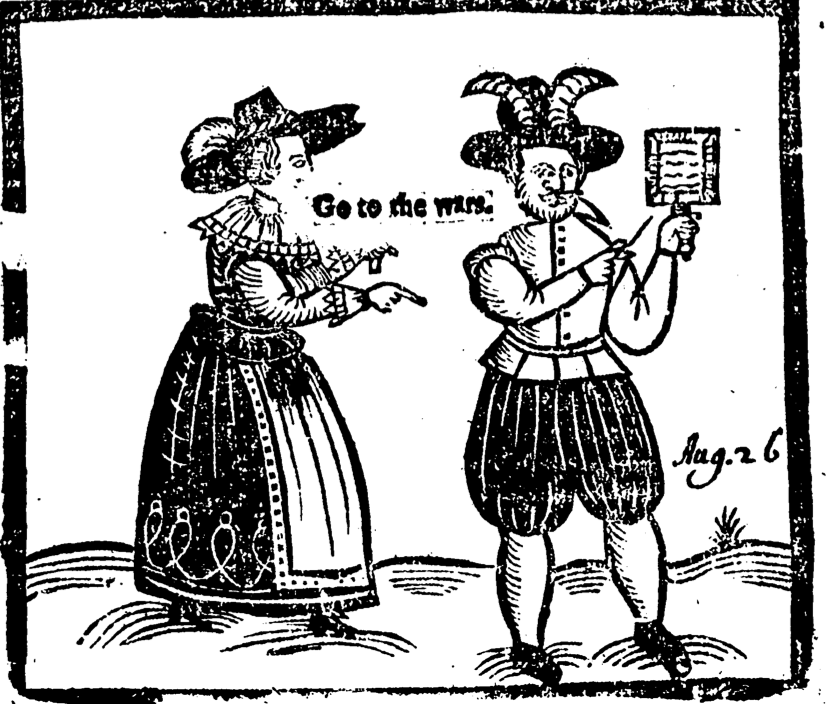
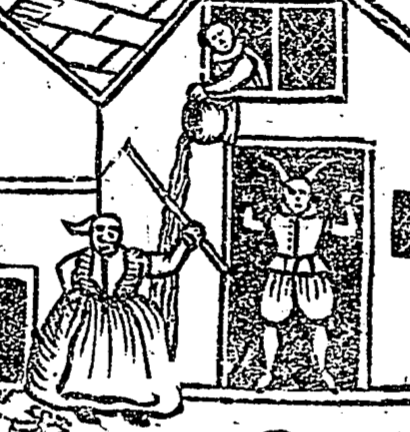
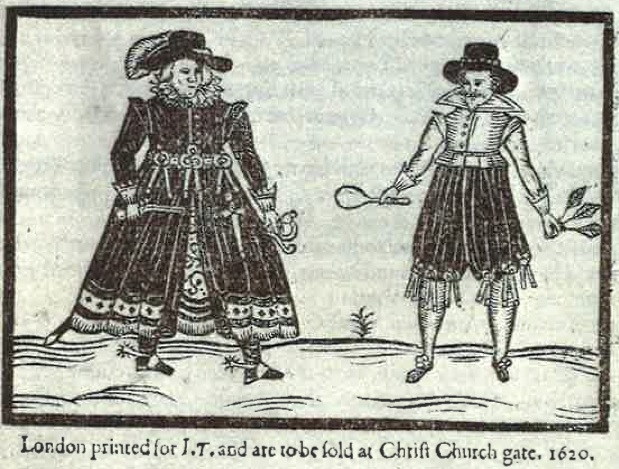
Touchstone's cynical argument about both men and women is echoed in the recurring imagery of cuckold horns in the play. According to myth, men who have wives that have cuckolded them (i.e., committed adultery on them) grow horns that are invisible to them but visible to other people. The horns are a sign of social stigma and shame, but one that a man is powerless to detect, much less defend himself against. The following images show some early modern woodcuts of men with cuckold horns.
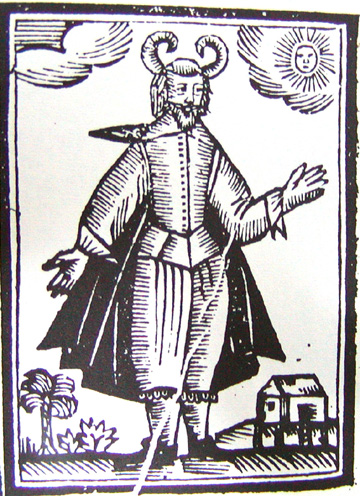
Rosalind is well aware that these are the stereotypes that men have about women, and she uses these stereotypes to educate Orlando, along with her masculine disguise. The first thing that she does is call attention to the stereotypical role that he is playing (as a man drawn distracted by love), arguing that he is not playing his role well enough.
Rosalind. There is none of my uncle's marks upon you; he taught me
how to know a man in love; in which cage of rushes I am sure you
are not prisoner.


Orlando. What were his marks?

Rosalind. A lean cheek, which you have not; a blue eye and sunken,
which you have not; an unquestionable spirit, which you have not;
a beard neglected, which you have not; but I pardon you for that,
for simply your having in beard is a younger brother's revenue.
Then your hose should be
ungarter'd, your bonnet unbanded, your
sleeve
unbutton'd, your shoe untied, and every thing about you
demonstrating a careless desolation. But you are no such man; you
are rather point-device in your accoutrements, as loving yourself
than seeming the lover of any other.

Questions:
  • Compare and contrast this description of the lover’s role to Jaques’ description: “And then the lover, / Sighing like furnace, with a woeful ballad / Made to his mistress' eyebrow.”
  • What function does clothing play in Rosalind’s description of a lover? Is it a costume or a sign of a role that a man plays at a certain stage in his life? Does it mark Orlando's love-sickness as artificially constructed? Why or why not?
  • What does it matter that Rosalind calls Orlando out for not playing a role well enough? Does it end up denaturalizing some of the stereotypes that Orlando tends to think in--about the male experience of being in love or about women more generally?
This process of denaturalizing the stereotypes that Orlando favors continues in the methods that Rosalind uses to teach him how to be "cured" of his love:
Orlando. Did you ever cure any so?

Rosalind. Yes, one; and in this manner. He was to imagine me his love, his mistress; and I set him every day to woo me; at which time would I, being but a moonish youth, grieve, be effeminate, changeable, longing and liking, proud, fantastical, apish, shallow, inconstant, full of tears, full of smiles; for every passion something and for no passion truly anything, as boys and women are for the most part cattle of this colour…

Orlando. I would not be cured, youth.

Rosalind. I would cure you, if you would but call me Rosalind, and
come every day to my cote and woo me.


Orlando. Now, by the faith of my love, I will. Tell me where it is.

At this point, I find it very useful to bring in psychoanalytical theory. Freud's articulation of the Madonna-Whore complex is particularly useful in this play.
Picture
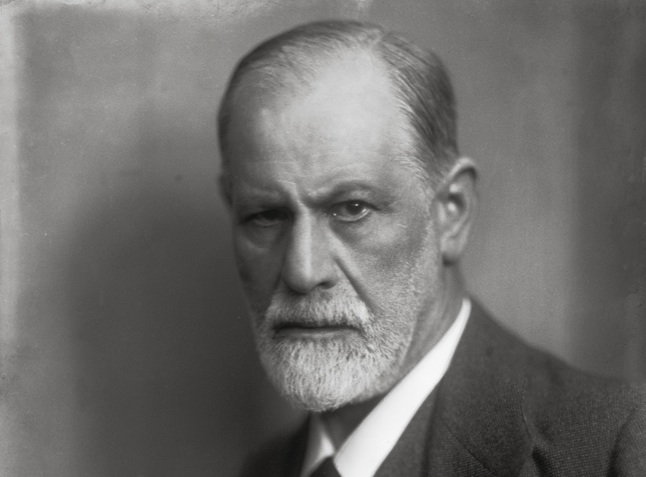
Portrait of Sigmund Freud
Sigmund Freud invented the term “Madonna-Whore Complex” to describe a group of men he was treating. The basic idea is that such men make a distinction between objects of desire and objects of affection, and they are unable to reconcile the two. According to Freud, “Where such men love they have no desire and where they desire they cannot love.”

What Freud is commenting on is a pathological version of something that might already be at play in As You Like It: women’s sexuality is constructed as two mutually exclusive modes—1) an idealized virginity that is worshipped and loved (Silvius and Orlando), and 2) a degraded sexuality that is both uncontrollable, shameful, and polluting (Touchstone). 

It is worth noting that both of these poles of female sexuality are constructed by patriarchal thinking. Such stereotypes are a means of policing women’s actions; however, they can also affect how men see both women and themselves in relation to women.

Rosalind "cures" Orlando of loving in a stereotypical way by ramping up the misogynistic stereotypes about women to eleven--to a point that is so ridiculous that Orlando seemingly stops accepting patriarchal stereotypes about women. In the mock marriage scene in Act 4, he seems to relinquish his attempts to signify what Rosalind will be or do, and he instead just rolls with the punches that "Rosalind" (i.e., the character that Ganymede plays) dolls out to him:
Rosalind. Now tell me how long you would have her, after you have
possess'd her.

Orlando. For ever and a day.

Rosalind. Say 'a day' without the 'ever.' No, no, Orlando; men are
April when they woo, December when they wed: maids are May when
they are maids, but the sky changes when they are wives. I will
be more jealous of thee than a Barbary cock-pigeon over his hen,
more clamorous than a parrot against rain, more new-fangled than
an ape, more giddy in my desires than a monkey. I will weep for
nothing, like Diana in the fountain, and I will do that when you
are
dispos'd to be merry; I will laugh like a hyen, and that when
thou are
inclin'd to sleep.

Orlando. But will my Rosalind do so?

Rosalind. By my life, she will do as I do.

Orlando. O, but she is wise.
I like to ask my students to think about that last line, "O, but she is wise" and to consider multiple ways to read it. Although they initially consider that the "but" here is a negation (she won't act the way you claim she will because she is too wise to be so foolish), they usually come around to the opposite reading (that he is willing to accept Rosalind's actions because he really does trust in her wisdom). I usually mention that this scene in Act 4 is a mock-marriage ceremony that uses language from the actual marriage vows from the rites of the Church of England: this scene is often staged in modern productions with a kiss, or with Orlando’s recognition either that a) Ganymede is Rosalind, or b) that he’s attracted to the person in front of him.  I ask my students how they would stage it with this theater tradition in mind: After Orlando listens to all the wayward things that "Rosalind" will do, he asks “But will my Rosalind do so?” (4.1.130) and then he affirms, “Oh, but she is wise” (4.1.132).  That is a super ambiguous response.  How would you interpret that?

This is where the clothing comes back to the fore: Orlando has put Rosalind on a pedestal, especially in his poetry to her. She removes herself from the pedestal through her male clothes and becomes his friend first. He gets to know her as a person who has an interior life the same as his. Then she challenges him to think about how he has tried to construct her
artificially in his mind through stereotypes, and she shows him how dangerous such thinking is for the relationship between men and women. The twinned strategies that she uses help her to deconstruct his simplistic thinking.
Yesterday the bishop of London called together all his clergy about this town, and told them he had express commandment from the King to will them to inveigh vehemently and bitterly in their sermons against the insolency of our women, and their wearing of broad-brimmed hats, pointed doublets, their hair cut short or shorn, and some of them stilettos or poniards, and other such trinkets of like moment, adding withal that if pulpit admonitions will not reform them he would proceed by another course. The truth is, the world is very far our of order, but whether this will mend it, God knows. (Chamberlain)
A comparison of Chamberlain's letter here with Orlando's speech "O, but she is wise" is a nice way to wrap up a discussion of Act 4.
Next Page
Last Page
0 Comments

Teaching Acts 1-2 of As You Like It with Puritan Polemics against Clothing and Theater

5/18/2015

0 Comments


Picture
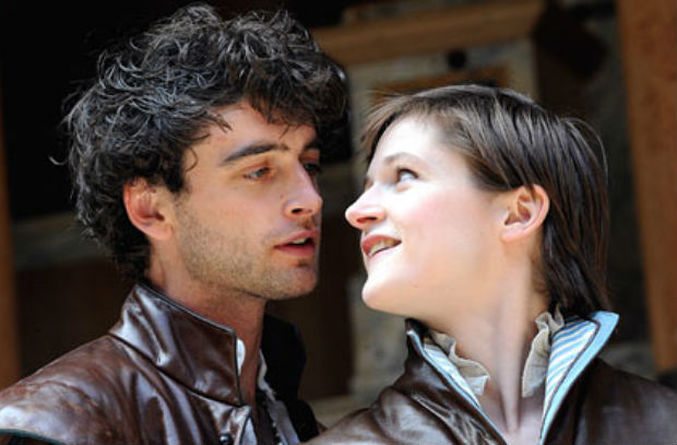
Jack Laskey as Orlando and Naomi Frederick as Rosalind in Shakespeare's Globe 2009 production of As You Like It, directed by Thea Sharrock. Photo: Alastair Muir.
As You Like It is a very winning play, so much so that it is actually a little hard to teach. Students get kind of swept up in the dizzying layers of identity within the plot, and they sometimes miss references. It's a strangely academic play, loaded with commentary on older myths from the bible (the story of Cain and Abel), Ovid (the rape of Ganymede), and British folktales (the myth of Robin Hood). Although students are not wrong for getting swept up into the question of "who's Rosalind," it is helpful for them to think about some of the references to older literature.  Personally, I like to pair this discussion with Puritan polemics against the theater and clothes because both the older literatures and the Puritan polemics deal with topics that are of vital importance to this play: homoeroticism and the idea of a moral education.

One of the first questions that I ask my students to think about is why does Rosalind choose the name Ganymede. They often do not know the allusion to the classical myth, so it is worth it to show the following passage from Ovid.

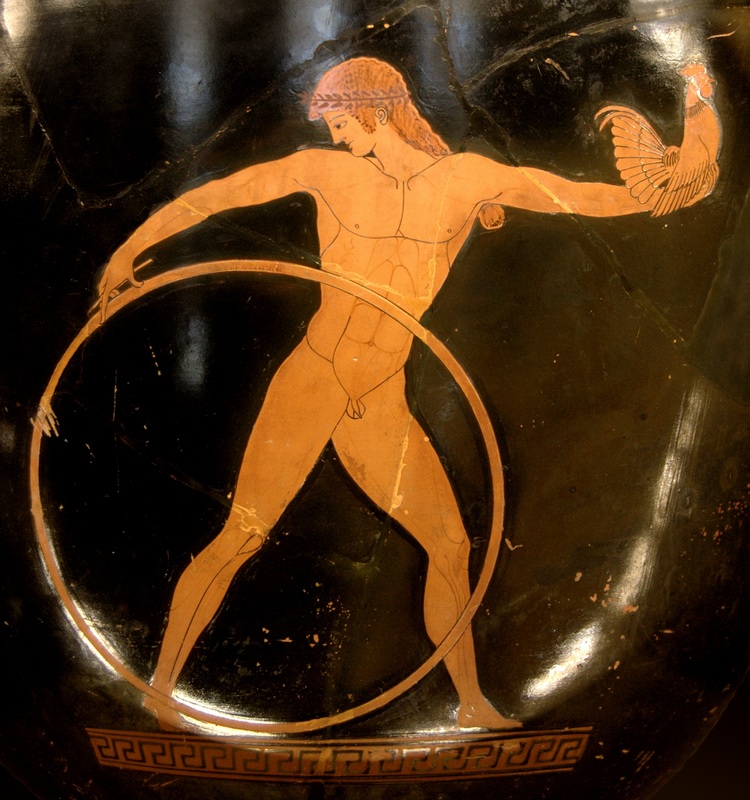
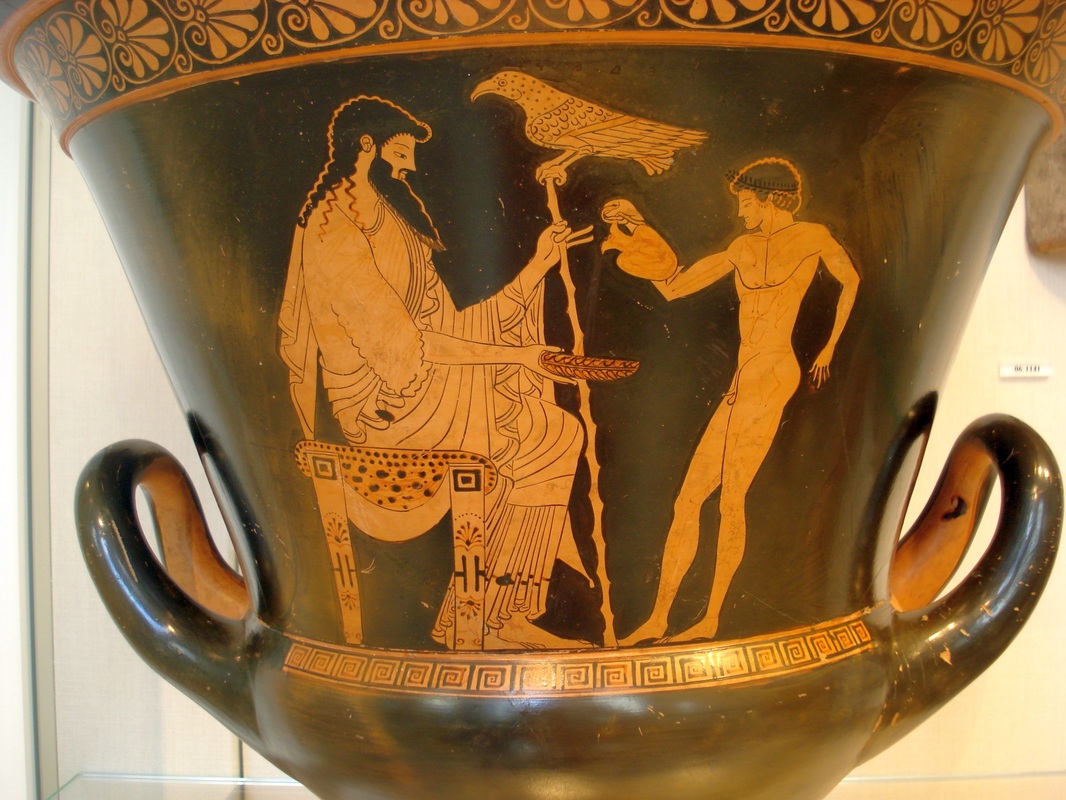
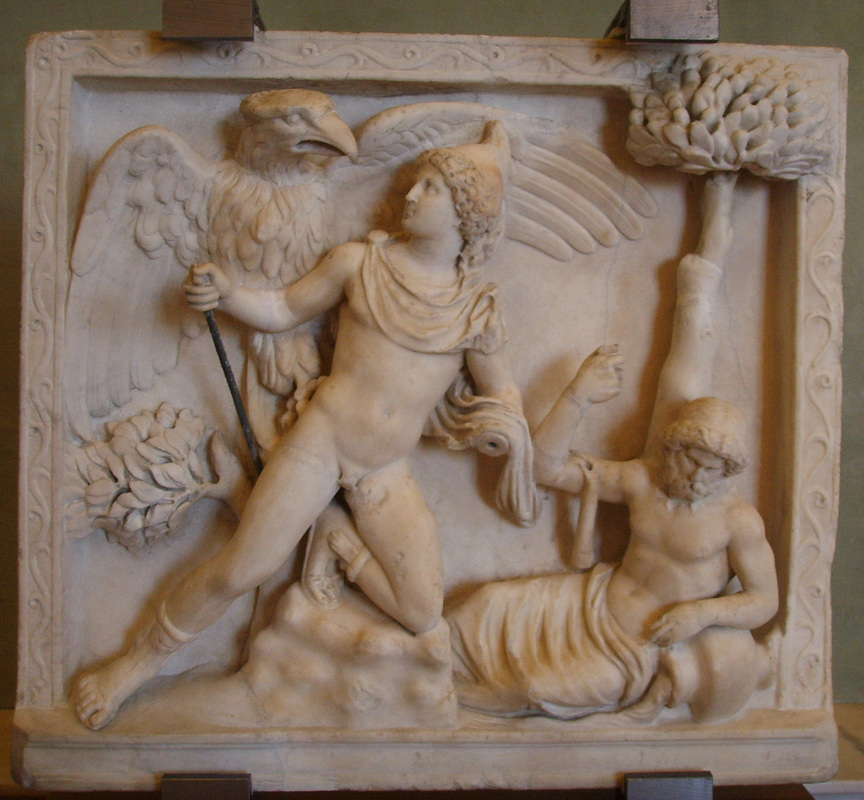
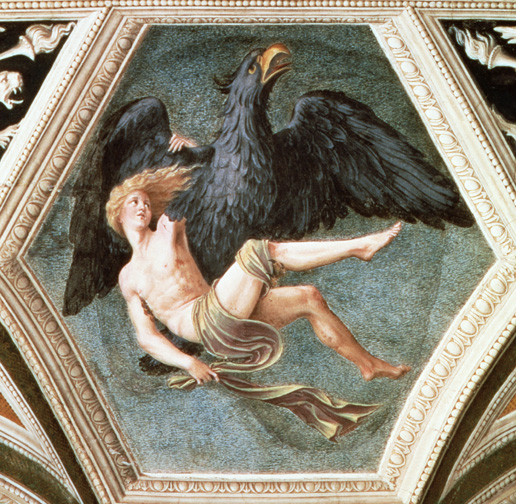
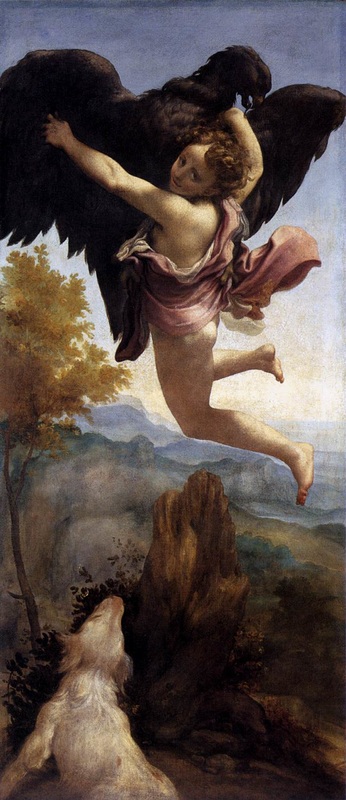
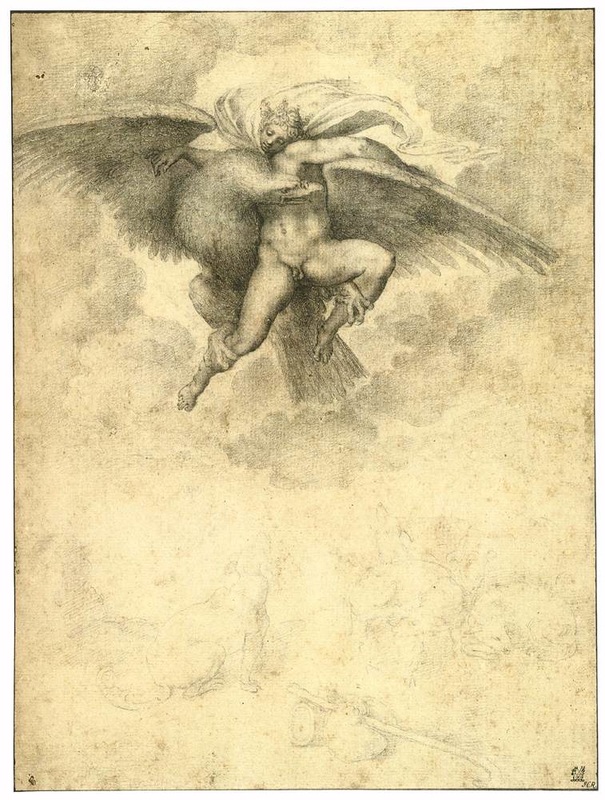
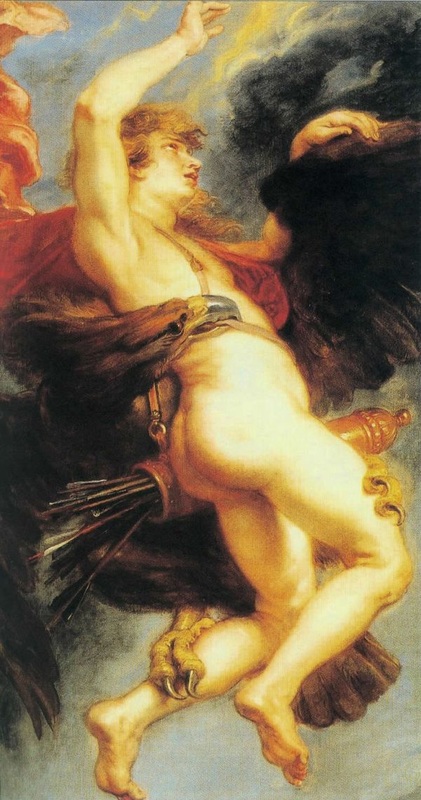
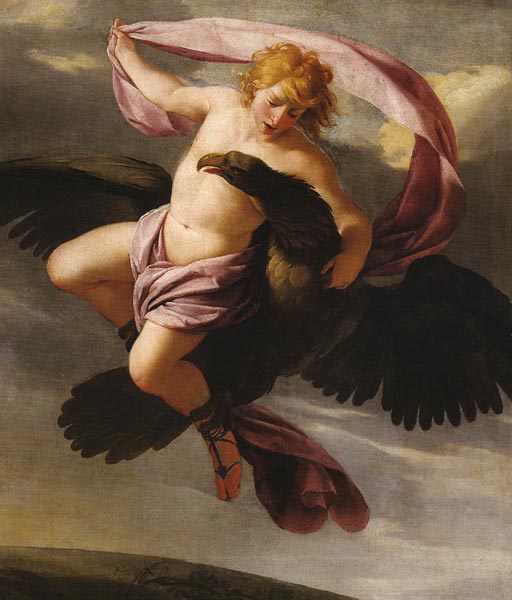
Ganymede in Classical and Renaissance Art

Students are more familiar with the idea of Zeus or Jupiter changing himself into the form of a bird (or bull, or golden shower, or really anything) in order to rape a girl, but they are not often aware that the king of the gods also engaged in this sort of predation to rape young men. To them, this story is an oblique reference to a forgotten myth, and it is easy to pass over.

But, as James Saslow has argued, Ganymede was an enduring symbol for the beautiful young male who attracted homosexual desire: “The very word ganymede was used from medieval times well into the seventeenth century to mean an object of [male] homosexual desire.” The fact that students don't know this reference anymore might have more to do with how the myth and its iconography have changed since the eighteenth century.
Michael Preston Worley has argued that homoerotic aspects of the legend were rarely dealt with after this time period and were, rather, "heterosexualized." Instead, the image of Ganymede was that of a naive adolescent accompanied by an eagle.

In order to show my students how well known and pervasive this myth was when Shakespeare was writing, I offer them a slide-show of art before, during, and shortly after Shakespeare was writing.

The king of the gods [Jupiter] once burned with love for Phrygian Ganymede, and to win him Jupiter chose to be something other than he was. Yet he did not deign to transform himself into any other bird, than that eagle, that could carry his lightning bolts. Straightaway, he beat the air with deceitful wings, and stole the Trojan boy, who still handles the mixing cups, and against Juno’s will pours out Jove’s nectar.

-- Ovid, Book X:143-219 of Metamorphoses
After we consider the art above, I ask them to think about Rosalind's choice at the end of Act 1 to adopt a masculine disguise:
Rosalind: I'll have no worse a name than Jove's own page,
And therefore look you call me Ganymede.
But what will you be
call'd?
Questions:
  • Why would Rosalind chose this name, out of all the possibilities that exist, in light of this tradition in art and literature? How would it change the play if she wants to be the male object of homosexual desire for Orlando?
  • On a related note, why would Celia choose “Aliena”? How is her name revelatory of her character? Is she an alien, and (if so) what or whom is she alienated from?

This discussion is worth pairing with brief excerpts from the very long tradition of Puritan writing against the clothing and theater as hotbeds of sexual impropriety that become "schools of abuse." I ask my students to read the following passages in conjunction with Acts 1-2 of As You Like It:

  • A section on the dangers of theatrical cross-dressing from William Prynne’s Histriomastix in the Norton Critical Edition of As You Like It, pp. 214-217
  • A section “Doublets for Women in England” from Philip Stubbes’ The Anatomy of Abuses in the Norton Critical Edition of The Roaring Girl pp. 118-119
  • A section “Stage Plays and Enterludes, with their Wickedness,” from Philip Stubbes’ The Anatomy of Abuses pp. 101-107 from Early English Books Online (EEBO) *You will need institutional access to this database to see the archive

The passages about cross-dressing (either on the stage or in "real life") and about the theater as a school of abuse are especially interesting because of how the Puritans handle the questions of identity and desire.  On the one hand, we see a strong attempt to fix signs and signifiers in static relation to each other (both of the following excerpts are from Stubbes). Part of the wickedness of cross-dressing and stage plays is that they are self-evidently skewing that natural, even holy relationship between the sign and the signifier:

In the first of John we are taught that the word is God, and God is the word; therefore, whoever abuseth this word of our God on stages in plays and interludes abuseth the deity of God in the same. (102)

So that whether they be the one [religious plays of “divine matter”] or the other [secular plays of “profane matter”], they are quite contrary to the word of grace, and sucked out of the devil’s teats to nourish us in idolatry, heathenry, and sin. (103)
On the other hand, we see a fear that the signs point too well to things that they don't really signify, so that they can provoke desire that is not normally there. For example, William Prynne argues in Histriomastix that “the fabulous lusts of antiquity” will be provoked by theatrical cross-dressing. In other words, the boy actor crossed-dressed as a woman will provoke male audience members to desire both the female character and the male actor underneath the feminine clothes. How is Ganymede in Shakespeare's play an allusion to the "the fabulous lusts of antiquity"? The following passages from Stubbes continue this conversation:
The shameless gestures of players serve nothing so much as to move the flesh to lust and uncleanness. (103)

Do they not induce to whoredom and uncleanness? Nay are they not rather plain devourers of maidenly virginity and chastity? For proof whereof, but mark the flocking and running to theaters and curtains…where such wanton gestures, such bawdy speeches, such laughing and fleering, such kissing and buffing, such clipping and cussing, such winking and glancing of wanton eyes and the like is used as is wonderful to behold. Then these goodly pageants being done, every mate sorts to his mate, every one brings another homeward of their way very friendly, and in their secret conclaves (covertly) they play the sodomites, or worse. And these be the fruits of plays and interludes, for the most part. (105)
Both Prynne and Stubbes assert that plays provoke “sodomitical uncleaness” where “men rush on men with outrageous lust.” Is Shakespeare picking up on this idea when he has Rosalind pick a name that is so closely associated with male homosexual desire? Does the play seem to support or satirize the assertion by the Puritans that the theater is a school for indoctrinating "unclean" sexual freedom and exploration? This is a great question to prepare students for the education in love that Rosalind gives to Orlando in Acts 3-4 of the play.

If the play denaturalizes the relationship between signs and signifiers then how does it treat gender as opposed to sexuality? This question comes up again and again through the recurring motif of the doublet and hose (for men) and the petticoats (for women). In the passage below, Rosalind talks herself into gathering her strengths even though she is exhausted and hungry:
Picture
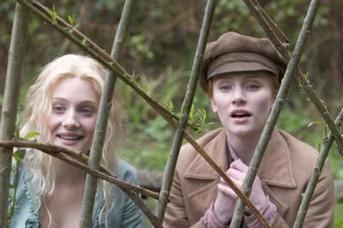
Romola Garai (as Celia/Aliena) and Bryce Dallas Howard (as Rosalind/Ganymede) in Kenneth Branagh's 2006 As You Like It.
Picture
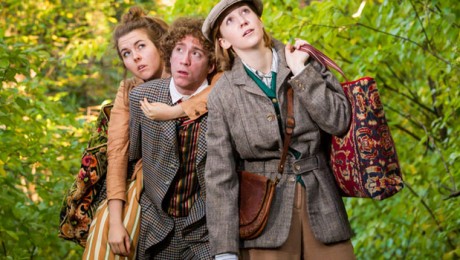
Celia Quillian (Celia), Brad Spadafora (Touchstone) and Alyssa Gera (Rosalind) in Wake Forest Theatre's 2012 production of As You Like It, directed by Sharon Andrews.
Rosalind. I could find in my heart to disgrace my man's apparel,
and to cry like a woman; but I must comfort the weaker vessel, as
doublet and hose ought to show itself courageous to petticoat;
therefore, courage, good
Aliena.

Celia. I pray you bear with me; I cannot go no further.
Questions:
  • Explain Rosalind’s use of metonymy here. What are the gendered implications of her use of language?
  • Is she like Orlando in some of the later scenes, wherein he comforts and provides for Adam? 
  • How “natural” is gender if part of being a good young man can be easily performed by putting on doublet and hose, and leaving off the petticoat?
  • Is this what is troubling Stubbes when he says that “as [women] can wear apparel assigned only to man, I think they would as verily become men indeed”?
  • How does the question about whether or not Rosalind wants to be the male object of Orlando's desire intersect with this discussion about how she can put on and take off her gender?

These are great questions for opening up the play to questions about gender, sexuality, clothing and theatrical history (especially in terms of religious dissent). Of course, these are very mature themes to be discussing in a high school English. I feel, however, that they are necessary topics to consider not only because advanced high school students and underclass undergraduates need to be challenged to think about the intersection of gender and sexuality but also because they really need to be challenged to think about how "natural" either gender or sexuality really is.
An untethered gayness... offers a way out of the emerging cul-de-sac of “born this way” political strategies, which limit us to a logic of bland, “don’t blame me” toleration rather than true pluralism.

--I Was Born Homosexual. I Chose to Be Gay. By J. Bryan Lowder
Our students have been raised in an era where the movement to extend marriage rights to gay people has been connected to the rhetoric that gay people are "born" with a sexual orientation. This rhetoric has helped to affect needed social changes and extend civil rights. It has also profoundly affected how the young people in our country think about sexuality. They are the main reason why a majority of Americans now support gay marriage. And while this rhetoric has had a net positive effect on our society, it is also a very limiting perspective as J. Bryan Lowder explains in the passage above from his long but excellent essay. It is a good exercise for students to think about what it might mean that Rosalind is practicing a kind of "queer heterosexuality" when she so convincingly chooses to perform masculinity and become a male object of Orlando's desire. 

While I don't necessarily think that I would send my students to that link, I would try to get them to think about some of the core issues that the essay (and the term) raises: how radically free Rosalind is, and how her freedom is enticing to Orlando and helps to educate him so that he is ready to be in an actual partnership with her by the end of the play.
Next page
Last page
0 Comments

Teaching Acts 4-5 of Twelfth Night with Haec Vir

5/18/2015

0 Comments


Picture
As I mentioned in my earlier post about Acts 1-2 of Twelfth Night, Hic Mulier was a seventeenth-century pamphlet decrying the vogue in London for women to adopt certain features of masculine attire in their dress. A follow-up pamphlet entitled Haec Vir was published almost immediately afterwards; the closeness of the publication dates has prompted some scholars to speculate that the rebuttal was actually written by the same author. Haec Vir (another Latin grammar joke in the title, this one meaning "this mannish woman") offers the defense of the cross-dressing woman in the form of a interview between two characters, one named Hic Mulier and the other named Haec Vir.

Again, I do not think it is necessary for high school students to read the entirety of the pamphlet. I think that two passages in particular are especially pertinent and that they help to deepen the conversation about Viola's cross-dressing in the play. The first passage to consider is below. The character Hic Mulier is responding to the criticism that it is unnatural for women to dress like men:
To alter creation were to walk on my hands with my heels upward, to feed myself with my feet, or to forsake the sweet sound of sweet words for the hissing noise of the Serpent. But I walk with a face erect, with a body clothed, with a mind busied, and with a heart full of reasonable and devout cogitations, only offensive in attire, inasmuch as it is a stranger to the curiosity of the present times and an enemy to Custom? Are we then bound to be the flatterers of Time or the dependents on Custom? Oh miserable servitude, chained only to Baseness and Folly, for than custom, nothing is more absurd, nothing more foolish.
It's worth it to ask students to paraphrase this passage in their own words. The basic gist is that there is nothing "natural" about the dress of either biological sex, that fashion itself is a custom or a tradition that is dependent on time and place, and that fearing a change in fashion because it is "a stranger to the curiosity of the present times" is a foolish fear that is begotten in slavish servitude to custom.

Students generally like this line of argument for several reasons. They are at an age where they are defining their own sense of self through their tastes (including their clothes), and this means that they are resisting the fashions that their parents had previously picked out for them.  And while some more conservative students might be personally uncomfortable with men cross-dressing as women, almost everyone in Western culture is used to the idea of women wearing pants now.  Moreover, students intuitively feel that the seventeenth-century derision at women's adopting masculine modes of dress was somehow means of social control to keep women in their subordinate places. Even without having studied about the ways that masculine modes of dress have been tied to movements of social progress for women, students seem to pick up on this instinctively because of popular iconography.
Picture
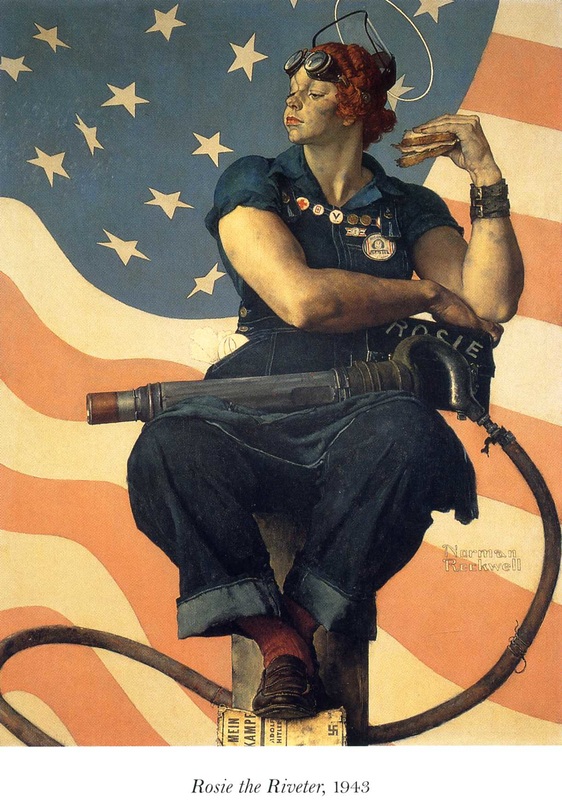
An icon of the female workers taking up the jobs that men left vacant while fighting in WWII, Rosie the Riveter wears pants.
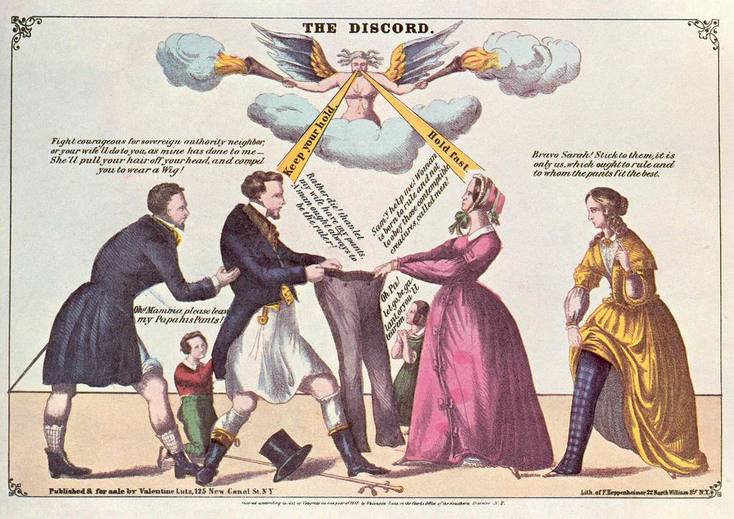
The opposite is also true: periods of social conservatism tend to emphasize that there is only one pair of pants, and that if women wear them then men cannot. Vehement arguments against women wearing masculine attire seem linked to the historical repression of women, and both limitations on women's social mobility and their choices in clothing are founded on the rhetoric that men and women are different in their very nature and therefore cannot and should not do the same things or look the same way.
Picture
This rhetoric has recently surfaced again with unapologetically misogynistic websites, some of which purport to be in support of "men's rights," which espouse the following justification for their hatred of both women and feminism: 1) "Men and women are genetically different, both physically and mentally. Sex roles evolved in all mammals. Humans are not exempt," and 2) "A woman’s value significantly depends on her fertility and beauty. A man’s value significantly depends on his resources, intellect, and character." These types of websites decry any cultural work that posits that women can be physically strong and possess interior lives that are equally complex as men's; they argue that such cultural objects contain an insidious ideology that blocks family formation, which has historically had a positive impact on society.

Generally speaking, students like Hic Mulier's argument about gendered fashion being tied to custom because it is surprisingly modern, and they can relate to it. While many students have deep misunderstandings about feminism, they generally do think that the social progress of women over the past century has been both important and good. Unlike the so-called "men's rights" websites, most students (of both genders) do not think that the social good of "the family" necessitates the repression of female agency and subjectivity. For instance, they generally think that it is a good thing that women can vote and work; however, the idea that men and women are genetically hard-wired a certain way by Nature (either by God or evolution) is one that permeates culture so deeply that they don't always question it.

This conversation is a good one to have in conjunction with Twelfth Night because the play does make certain claims about the how "natural" gender is in relation to biological sex. There are two really important scenes to consider.

The first is the fight that Sir Toby attempts to set up between Sir Andrew and Cesario.  When Cesario/Viola is contemplating how disastrous a fight with Sir Andrew might be for her she says, "
Pray God defend me! A little thing would / make me tell them how much I lack of a man." Although Shakespeare has taken great pains to show that Sir Andrew is just as unwilling to fight as Cesario, and even suggests that Cesario/Viola's unwillingness to fight has to do with never having been trained how to fight, Viola's language here suggests that it is her biological sex itself that will expose her. It's worth it to spend a little bit of time to ask students about 1) why the play suggests that Cesario might lose (or win) a fight with Sir Andrew, and, 2) why Viola assumes that Cesario would absolutely lose in a fight with Sir Andrew? Also, how do Sir Toby's pranks become a means for policing gender norms?

The second scene to consider is the final scene. The following passage, spoken by Sebastian to Olivia, is especially pertinent.
So comes it, lady, you have been mistook:
But nature to her bias drew in that.
You would have been contracted to a maid;
Nor are you therein, by my life, deceived,
You are betroth'd both to a maid and man.
The bias is a weight in a ball that causes it to veer to one side when it is rolling. So, like a bowling ball that swerves at the last minute to knock over a pin, Olivia suddenly veers toward Sebastian after having rolled herself toward Viola consistently throughout the play. Sebastian suggests that it is Nature herself that causes this sudden veer, in part because "nature" necessitates a procreative pairing (for a fuller articulation of this reading, see Stephen Greenblatt's seminal essay, “Fiction and Friction,” from Shakespearean Negotiations [Berkeley: University of California Press, 1988], 66-93).

Does this image suggest that there is something inherent and natural about gender and/or sexuality that causes men and women to act in fundamentally different ways so that they will inevitably end up in procreative pairs? If so, does that suggest that this play is a more conservative one than we might otherwise think (i.e., does it line up with the argument made by the men's rights groups cited above) ? Alternatively, does the play suggest that Viola's playful adoption of masculine attire is a sort of liberation from gendered norms, and that this freedom is ultimately a good thing because it brings around a happy ending for most of the characters?

This brings me to the second passage that I point my students to in Haec Vir:
Why do you rob us of our ruffs, of our earrings, carcanets, and mamillions, of our fans and feathers, our busks, and French bodies, nay, of our masks, hoods, shadows, and shapinas [?]… Now since according to your own Inference, even by the Laws of Nature, by the rules of Religion, and the Customs of all civil Nations, it is necessary there be a distinct and special difference between Man and Woman, both in their habit and behaviors, what could we poor weak women do less (being far too weak by force to fetch back those spoils you have unjustly taken from us), than to gather up those garments you have proudly cast away and therewith to clothe both our bodies and our minds?... Cast then from you our ornaments and put on your own armor; be men in shape, men in show, men in words, men in actions, men in counsel, men in example. Then will we love and serve you; then will we hear and obey you…
Again, it is worth it to ask your students to paraphrase this passage. The character Hic Mulier says here that the reason that the women of London have been cross-dressing is that they have had to start being more masculine since all the men of London are too feminine.  If the men would only be more manly, then the women would happily be more womanly and then the entire patriarchal fantasy would continue to proceed without interruption. This is an about-face from the earlier argument that the character Hic Mulier makes. Rather than arguing that clothing and gender roles are arbitrarily constructed by culture, she argues that there is a natural order for gender, but it is one that has first been broken by men instead of by women.

As I mentioned in my post about the opening lines of Twelfth Night, Orsino's call for more love and more music is an unusual way to begin the play in terms of plot. The plot really begins with Viola's miraculous survival after the ship crashes, but Shakespeare chooses to begin the play with Orsino's now-famous lines, "If music be the food of love, play on." David Halperin has argued that pre-modern cultures associated love with women and war with men, so much so that a man's expression of desire for women or sex could be understood as unmanly in itself. That is, the desire for women or for heterosexual love often registered as effeminizing or weakening. This logic still exists in the misogynistic websites like the one I referenced above, which not only offer advice for men who want to improve their "game" (creating an association between sex and conquest) but also deride men who actually dare to love women as being "whipped" or "betas."

It is worth it to ask your students to compare and contrast Orsino in the opening and closing scenes of the play. Does he seem different? How so? How has learned or grown?
Orsino reveals that he “partly know[s]” that Olivia is in love with Cesario. How does that affect the way we think of Orsino? Also, Orsino plans to KILL Cesario to spite Olivia, and Viola seems to be ok with that!  What is up with that?  How does that affect the way we think of the relationship between Orsino and Cesario? Orsino wants Viola in her women’s weeds, but also talks sweetly to the page, naming her/him "Cesario," and calling attention to “his” male gender? (5.1.362-3). Why does he keep calling Viola "Cesario," even after he learns that she is really a woman in disguise as a boy? Has Orsino become more stereotypically masculine (ask them to define what they mean by "masculine"), and does the play register this as a good thing or a bad thing? Is the play making a similar argument to the one that the character Hic Mulier makes above at the end of Haec Vir, i.e., that Orsino has been too feminine and that once he becomes more masculine, he will be worthy of seeing Viola in her women's weeds? Is this argument similar to the misogynist websites today that tell men that the way to "score" women is to become more "alpha" and be more willing to degrade and objectify women? Is Shakespeare critiquing or participating in this rhetoric?

These are great questions with which to end a study of this play; they tie the play to both early modern and contemporary debates about gender, so students will be thinking about both the context in which Shakespeare was writing and how Shakespeare's play is directly connected to their own lives. After teaching this play in the context of clothing and gender, I think I will find it hard now to teach it without these two pamphlets from the querelle de femmes pamphlet war!


Next Page
Last Page
0 Comments
<<Previous
Forward>>

    Claire Dawkins

    English Instructor at Stanford's Online High School

    Archives

    August 2015
    May 2015
    October 2014
    September 2014
    June 2014
    May 2014
    April 2014

    Categories

    All
    Assignments
    Beaumont
    Behn
    Beowulf
    Bishop
    Brathwaite
    Cartier-Bresson
    Chaucer
    Coleridge
    Creative Writing
    Dickinson
    Donne
    Early American Literature
    Exams
    Gender Theory
    Genre
    Glaspell
    Horace
    John Smith
    Lesson Plans
    Literature Of Exploration
    Melville
    Milton
    My Smart Friends
    Ovid
    Pearl Poet
    Pynchon
    Queen Elizabeth I
    Rowlandson
    Shakespeare
    Sophocles
    Spenser
    Sterne
    Texts And Contexts
    Theory
    Visual Analysis
    Walker
    Whitman
    Williams
    Woolf
    Writing Instruction

    RSS Feed

Proudly powered by Weebly