Pixels & Pedagogy
  • Pedagogy
  • About Me
  • Courses

Writing Assignments for Trifles and The Glass Menagerie

5/29/2014

0 Comments


Picture
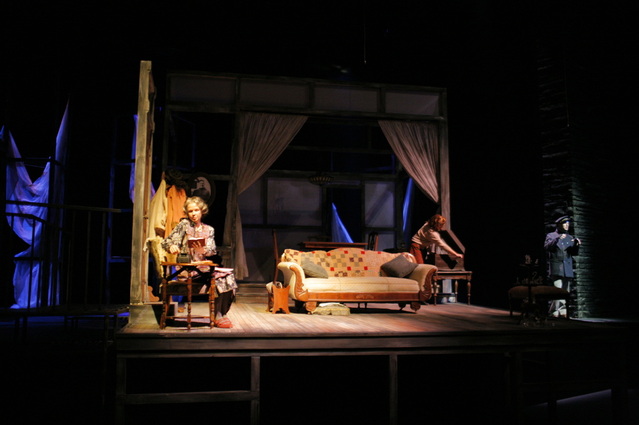
Set Design for The Glass Menagerie by Elizabeth “Biz” Grim, Photos by Luke Jordan
Picture
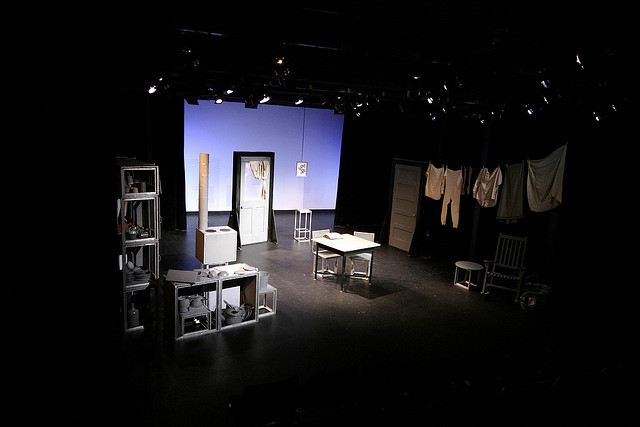
Set Design for Trifles by Katherine J. LeCocq, Photos by Justin Smiley
As promised, here are some paper prompts for both The Glass Menagerie and Trifles.  Some of these prompts are individual to one author or the other, and some ask for an argument that synthesizes readings of the two plays. As I noted before, I have benefited from the advice of my friend and co-teacher, Tiffany Gilmore. The paper prompts below were written variously by Tiffany or by me.
  • Modern plays, and Tennessee Williams’ in particular, are often intensely dialogue-driven and often include minimal stage directions and sets.  Consider how either stage directions or props help develop the theme(s) of one of the plays we read.  You may not choose the glass menagerie as a prop to develop the theme for dreams/fantasy/illusions.  However, all other props are available: the father’s portrait, the victrola, the furniture, etc.  You may use multiple props within one argument but your essay should not list an analysis of several props (the furniture represents this….. the photos on the wall represent this….the clothing represents this….) Avoid the obvious: “the shabby apartment , furnishings and clothing represents the poverty of the Wingfield family.”
  • Trifles is about small things which “say” a lot, what do we learn about the other characters, the plot, or something else through these small things which are overlooked by the male characters?  Stage directions focus the attention on the character/actor’s movements.  How is a character developed through their movements in or relationship to the physical space of the set?  How is a particular theme developed through stage directions that we could not get through dialogue alone?
  • Compare and contrasts the images of the sets for Trifles and The Glass Menagerie. Why do you think that these sets are so sparse? How does that sparseness do signifying work in the plays? How does the physical space of modern theater affect the way that you judge Tom and Mrs. Wright?
  • Does Glaspell seem to think that justice has been achieved by the end of Trifles?  Whether or not you think Mrs. Hale and Mrs. Peters were right for hiding the evidence from the men, how does the play make you want to see it one way or another?  You might consider how the plot develops, the stage directions impact our understanding of central conflicts in the play, or certain items seem loaded with symbolic meaning.  How do these literary devices make the reader consider justice from a certain point of view? 

And this final paper prompt is one that I liked a lot--but it's putting The Glass Menagerie into dialogue with Shakespeare instead of with Glaspell. Even though it's a bit off-topic, I thought I would share it with you!
  • Compare and contrast the theme of dreams in the two plays we read in our class, A Midsummer Night’s Dream and The Glass Menagerie.  How does reading the two texts together give you insight into the kind of statement about dreams that one of the plays is making? We spoke at length about how the dreamers in The Glass Menagerie can seem to be both courageous and selfish—and how the play presents dreams as either necessary or dangerous.  Does that discussion of dreams affect how you think about the types of dreamers in A Midsummer Night’s Dream, whom Theseus helpfully lists as lovers, madmen, and poets?  Alternatively, does thinking about the ambiguity regarding whether or not the dreamers in the forest outside of Athens learn from their journey help you to conceptualize whether or not Tom has learned anything as he presents his memory play to us?
Next page
Last page
0 Comments

Teaching Williams' The Glass Menagerie

5/21/2014

0 Comments


Picture
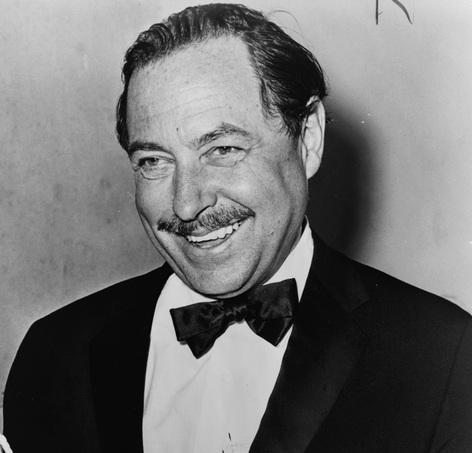
Tennessee Williams, looking dapper
I really enjoy reading Tennessee Williams' plays, but I have only taught The Glass Menagerie. It's a great play for teaching close reading, especially if you are interested in exploring the concept of symbols with your students.

Here are the basic questions that I ask students to consider:

On symbols:
Part of how Williams develops his characters is through the things that they say and do (including the things that people say about them), and part of how he develops his characters is through symbolism.  Certain concrete items in the play become invested with meaning because of how the characters talk about them. 

Consider the following symbols in relation to each character.
Look at the various symbols and discuss how these items in the play reinforce, qualify, or nuance what we know about the character through dialogue and/or stage directions.

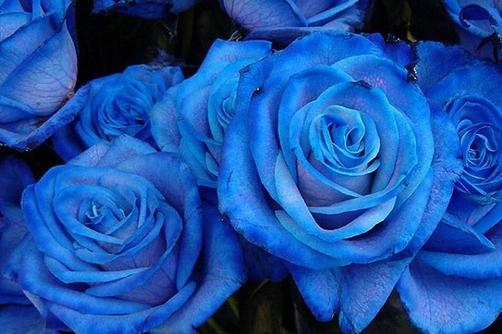
Laura: the glass unicorn in her menagerie, the blue roses, birds, and the Victrola (a type of phonograph where the speaker is hidden inside a piece of furniture). 
Picture
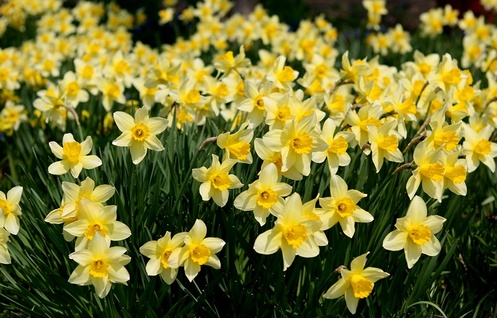
Amanda: the Old South, jonquils (a type of flower in the narcissus family that looks like a daffodil), and Mary (the mother of Jesus). 
Picture
Tom: the magician (he compares himself to one and he tells Laura about the show of Malvolio the magician), the fire escape, the Jolly Roger (the flag on a pirate ship), the movies, and Shakespeare.
Picture
On the reliability of the "narrator":
Tom opens and closes the play with soliloquies at the same time that a scrim drops down and completes the fourth wall to the Wingfield apartment. He also calls himself the “narrator” of the play and tells us that this is a memory (i.e., that this is his memory).  To some extent everything we see is supposed to be biased because it is filtered to us through Tom’s memory.  Look at his soliloquies. What is he saying?  How are we supposed to understand his escape at the end: necessary to save his life, completely selfish, or something else in between?

This last question is the big one that students enjoy talking about. To some extent, students will either sympathize with or judge Tom depending on how they read the character of his mother, Amanda.

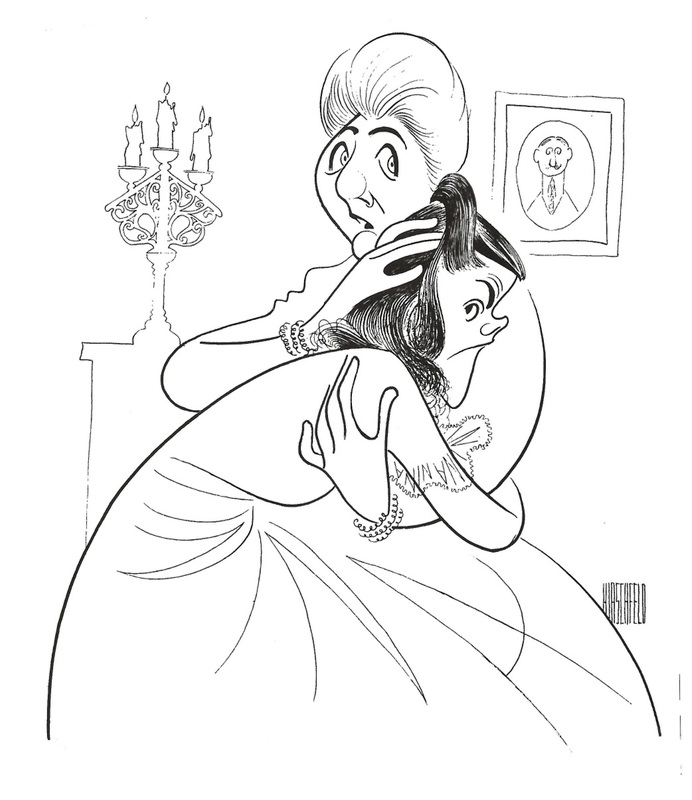
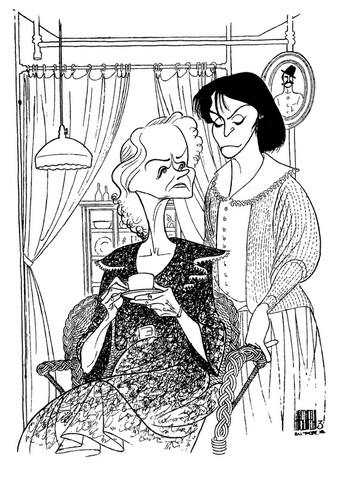
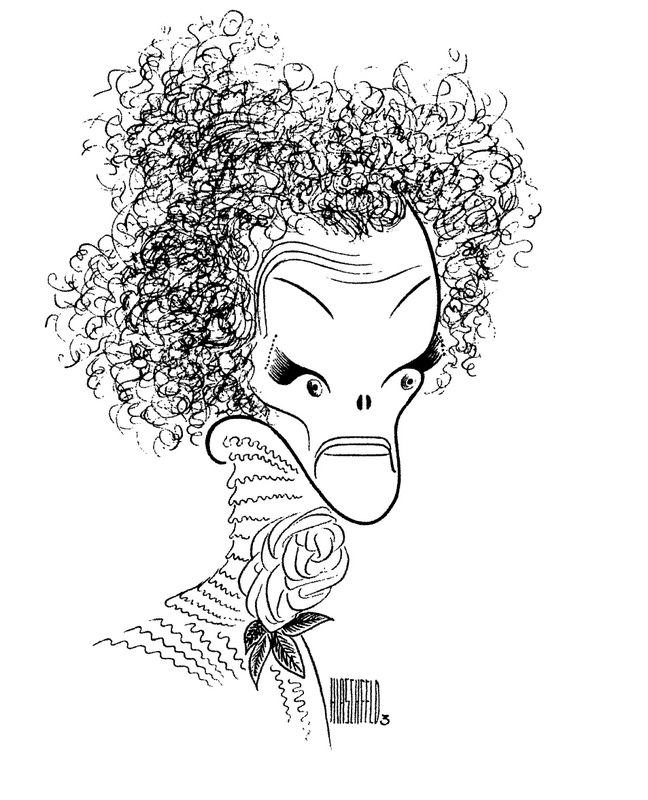
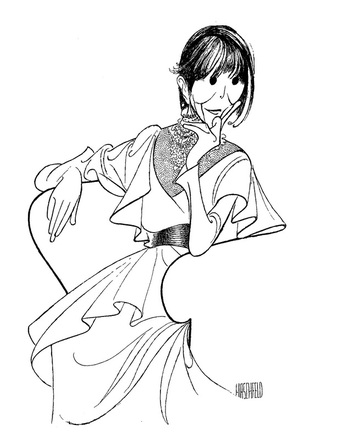
Amanda Wingfield is a divisive character, and I have found that it is useful for students to realize that their reading of her might not have been at all like their classmates. To this end, I have found it incredibly useful to bring in images from Al Hirschfeld's illustrations of various actresses who have performed the role of Amanda in stage productions of the play. The Historic New Orleans Collection (which houses the Williams Research Center) has collected an amazing book entitled Drawn to Life: Al Hirschfeld and the Theater of Tennessee Williams. (You can buy the book here.)

All of the images below are from the book, where you can also find a treasure of Hirschfeld's illustrations for all of Williams' plays
if you are interested.
Picture
Maureen Stapleton and Pamela Payton-Wright in The Glass Menagerie, Published in The New York Times, December 28, 1975
Picture
Jessica Tandy and Amanda Plummer in The Glass Menagerie, Published in The New York Times, January 27, 1983
Picture
Katherine Hepburn in The Glass Menagerie, Published in The New York Times, December 9, 1973

Picture
Linda Harris in The Glass Menagerie, Published in The New York Times, October 30, 1994
Katherine Hepburn in the image above looks so creepy--her beady eyes and skeletal face come across as Havisham-esque. In contrast, Maureen Stapleton looks so warm and grandmotherly. Jessica Tandy comes across as proud and disdainful, whereas Linda Harris looks intelligent and even a bit amused, perhaps. In each case, the way we think about the significance of Tom's "escape" changes when we consider whom he's leaving.

I ask students to think about what qualities of Amanda are captured in the performances of these various actresses, to consider how a casting director might want to emphasize one reading of Amanda through a particular actress, or how Hirschfeld may have emphasized various qualities of Amanda through his portraits. I ask them to look for lines that support the various interpretations of her character, and then to consider whom they would cast to play Amanda if they were in charge of casting a play.

This has been another installment of "My Smart Friends." My approach to teaching the play was shaped by my best friend, ironically named Amanda, who works at The Historic New Orleans Collection, and who introduced me to this marvelous teaching aid. Thanks, Amanda! Y'all should go visit The Collection if you're in NOLA.
Next page
Last page
0 Comments

    Claire Dawkins

    English Instructor at Stanford's Online High School

    Archives

    August 2015
    May 2015
    October 2014
    September 2014
    June 2014
    May 2014
    April 2014

    Categories

    All
    Assignments
    Beaumont
    Behn
    Beowulf
    Bishop
    Brathwaite
    Cartier-Bresson
    Chaucer
    Coleridge
    Creative Writing
    Dickinson
    Donne
    Early American Literature
    Exams
    Gender Theory
    Genre
    Glaspell
    Horace
    John Smith
    Lesson Plans
    Literature Of Exploration
    Melville
    Milton
    My Smart Friends
    Ovid
    Pearl Poet
    Pynchon
    Queen Elizabeth I
    Rowlandson
    Shakespeare
    Sophocles
    Spenser
    Sterne
    Texts And Contexts
    Theory
    Visual Analysis
    Walker
    Whitman
    Williams
    Woolf
    Writing Instruction

    RSS Feed

Proudly powered by Weebly