Pixels & Pedagogy
  • Pedagogy
  • About Me
  • Courses

Teaching Elizabeth Bishop's Poetry in Context

5/27/2014

1 Comment


Picture
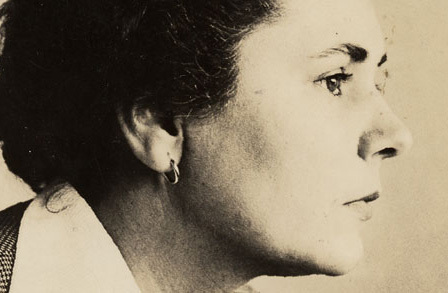
Elizabeth Bishop, © Joseph Breitenbach
This spring, I inherited a syllabus that had been hodge-podged together from several of my colleagues at the OHS over the years, and while some of the texts didn't work together anymore after so many years of Frankenstein-ing the syllabus, one really productive grouping was Virginia Woolf's Mrs. Dalloway, photographs by Henri Cartier-Bresson, and several poems by Elizabeth Bishop: "In the Waiting Room," "The Filling Station," and "The Moose."

The thread that tied these texts together was James Joyce's modernist notion of the epiphany, an aesthetic philosophy that he develops in Stephen Hero.
The three things requisite for beauty are, integrity, a wholeness, symmetry and radiance.

--James Joyce, Stephen Hero (1944)
Joyce outlines a three-step process of an "epiphany," a secularized moment of inspiration that borrows the language of religious revelation.
  1. The object is understood as a discrete entity that stands apart from the rest of the universe. Its integrity or wholeness becomes an object of meditation.
  2. The object is understood as being perfect in its own kind. Its symmetry and beauty are considered.
  3. The object's "soul" leaps out to the observer. It offers the viewer an epiphany in its radiance.
Now this discussion of objects and their "souls" works really well in two ways: 1) it creates a cohesion for all the modernists texts I've indicated above, and 2) it works really well as a point of contrast  later in the semester for developing a working definition for postmodernism, which is a concept that is legitimately hard to define. (I have discuss this before in my post on Pynchon).

It's also useful to contrast the model of "epiphany" to what Carter-Bresson calls the "decisive moment" in photography:
To me, photography is the simultaneous recognition, in a fraction of a second, of the significance of an event as well as of a precise organization of forms which give that event its proper expression.

Henri Cartier-Bresson, The Decisive Moment (1952)
Although Cartier-Bresson and Joyce differ in the way that they are talking about the gaze (is it mediated through the artist, or is it experienced directly by the reader/viewer?) they align in their conception that suspended moments of time communicate real meaning or significance.
Picture
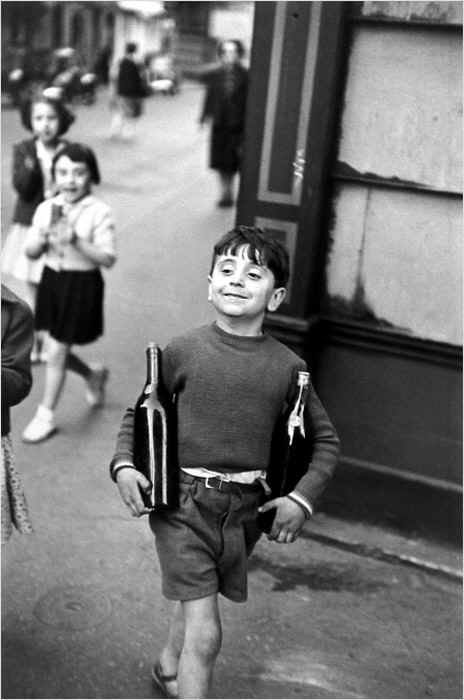
Henri Carter-Bresson, Rue Mouffetard (1958)
Cartier-Bresson is considered the "father of street photography" and he is a major influence in both photojournalism and photography as an art form. You can browse through a wide array of his photographs at the Magnum Photography website.

We can see this idea of the revelatory instant--whether its an epiphany or a decisive moment--at work in Woolf's novel in many ways: Clarissa shopping at Bond Street, Septimus waking up from his hallucinations to find Rezia making a hat, Peter looking at Clarissa and feeling excited and comforted that Clarissa simply exists just so, etc.
She had the oddest sense of being herself invisible; unseen; unknown; there being no more marrying, no more having of children now, but only this astonishing and rather solemn progress with the rest of them, up Bond Street, this being Mrs. Dalloway; not even Clarissa any more; this being Mrs. Richard Dalloway.

Bond Street fascinated her; Bond Street early in the morning in the season; its flags flying; its shops; no splash; no glitter; one roll of tweed in the shop where her father had bought his suits for fifty years; a few pearls; salmon on an iceblock.

--Virginia Woolf, Mrs. Dalloway


In the passage above, Clarissa takes comfort in the material objects around her. They ground her and make her feel suddenly less invisible. They pique her interest and then make her feel that both she and they are real and have meaning. I like to have my students compare and contrast some of the major moments of epiphany in the book.

The epiphany is apparent also in Bishop's three poems.
Picture
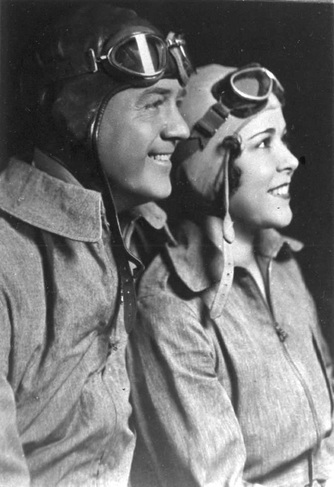
Martin and Osa Johnson, c. 1940
Picture
Mursi tribe Woman Reading Vogue Magazine - Omo Valley Ethiopia, © Eric Lafforgue
In the first of the poems, "In the Waiting Room," a child narrator comes to a sudden realization about identity through meditating on a National Geographic magazine while she waits for her aunt in the eponymous waiting room. This poem raises many questions about individual and group identity. It also establishes a complicated temporal shift: the writer reflects back on a moment in her childhood, but the speaker (a child) looks forward in terror to what it will mean to grow up and lose her individual identity through affiliation with other groups: age, familial, gender, cultural, etc.

In the second poem, "The Filling Station," a narrator meditates on the material objects of a family-run gas station shifting her perspective so that she stops thinking of the place as a "dirty" place of business and begins thinking of it as a home where people live and love.  There is a wonderful recording of Bishop reading her poem at this website. In her recitation, Bishop calls attention to a central question in her poem: does the narrator show a lazy sense of complacency, or is this a profound moment of empathy and connection across class boundaries?

In the third poem, "The Moose," a narrator moves from a hazy-dreamlike state into a sudden shock of reality when her bus trip through New Brunswick is interrupted by a moose crossing out of the fog into the street. This one is harder than the others because the moose itself is a complicated symbol in the poem: she is ugly and smells bad, but she somehow makes all the passengers on the bus feel a sudden sensation of joy.

Picture
A photograph of a female Moose in Denali National Park and Preserve © Derek Ramsey 2006
In each case, I ask my students to consider how the poem both depicts an epiphany, according to Joyce's definition, and offers the reader his or her own epiphany.  In more advanced classes, I might ask my students to then consider the frame of mediation that Cartier-Bresson proposes in his definition of the "decisive moment."

The decisive moment differs from the epiphany in that the important gaze comes from the perspective of the photographer and not from our perspective as viewers. In other words, the image is “decisive” because Cartier-Bresson has decided to mediate it or frame it just so for his viewers. As such, it tells us just as much about Cartier-Bresson’s artistic subjectivity as it tells us about the “real” world. The image may cause us to have an epiphany, but it also expresses something about the world that Cartier-Bresson wants us to see. We could investigate Bishop's poems (or, indeed, Woolf's novel) from this perspective as well.

The following are my paper prompts for their paper related to these texts:
  1. Compare and contrast the “decisive moment” in one of Cartier-Bresson’s photographs to the moment of falling in Bishop’s poem “In the Waiting Room.” Think about how formal elements of the image and the poem structure a moment in time. What kind of philosophy of subjectivity emerges from Bishop’s poem, and does Cartier-Bresson suggest a similar philosophy in his photograph? How do you know and why does it matter?
  2. Compare and contrast Mrs. Dalloway’s contemplation of Septimus’ suicide with the speaker’s contemplation of the family who lives about the gas station in “The Filling Station.” How does meditating on another person’s suffering help these characters to think about their own sense of self? What kind of philosophy of subjectivity does that suggest?
  3. Compare and contrast the moose in Bishop’s “The Moose” to something that Oedipa finds during her quest in The Crying of Lot 49. Do these textual moments subvert the “modernist sublimity” that we talked about in relation to the concept of the epiphany? Why or why not?
  4. Consider one of the suspended instants in Mrs. Dalloway that we’ve talked about in relation to the “thusness” of a thing and compare it to a comparable moment in The Crying of Lot 49. For example, Oedipa ponders several kinds of objects such as stamps, obscure textual variants of the fictional Jacobean tragedy The Courier’s Tragedy, and pseudoscientific objects related to entropy and demons, etc. What different kinds of philosophies about subjectivity emerge in the modern and the post-modern texts as a result of a character’s meditation on these material objects?
Last page
Next page
1 Comment

Creative Writing in the Literature Classroom

5/26/2014

1 Comment


First off, thanks to Claire for giving me the opportunity to guest post on her blog. I currently teach full-time at South Louisiana Community College. My interests are British literature and women's studies, but I teach everything from developmental English to American literature.

Erin M. Breaux     
[email protected]

     Over the last few years, I have gotten much more creative in my approach to the classroom. It's been exciting for me as a teacher. At the same time, I decided to require that students get more creative in gen-ed literature surveys. Those who are adventurous and artistic will run with it--going above the requirements, clearly in their element! Some will be very uncomfortable with such an open assignment; they are used to organized essays, and they don't know what to do when given a different option. But this is an assignment where I can and do reward effort and process. Some may complain at first because they'll think that they aren't creative or that this will be harder than a regular essay. But so many students say in their reflections that they actually ended up having fun and that they are proud of what they wrote/created.

     Let's face it--the students taking my gen-ed Brit Lit survey are there because it is required, and they are not planning to be English majors. I began to wonder whether they *had* to have the traditional literature analysis essay. Could I let them work on the same skills, and perhaps spur them to appreciate the fun of literature, by utilizing creative projects? In fact, through the assignments I share, students can practice and show close reading, attention to detail, and understanding of literary elements and forms. The assignments are win-win because they are also FUN for me to read. I sometimes have to make myself grade composition essays first because I want to skip them and read the fun stuff--i.e. these literature projects! :)

Either of these projects could be adapted into a low-stakes or in-class assignment if you prefer. I think having the whole class or small groups do a collaborative imitation in class could be fun though I haven't tried that.

Creative Adaptation/Imitation Project:
     The first assignment that I share below can be adapted for almost any literature course, and you could give more specific prompts or ideas connected to course texts if you desired. As you see, students also reflect and explain a bit so it helps me gauge their effort. In the future, I would like to build in a day on which students share an excerpt with the class. 

Choose a literary work by one of the authors on our reading schedule (or, if you would like to work with an author in the anthology who we did not read, you just need to get it approved by me), and then do one of the following options. Some students have successfully melded two of the options:

1.     rewrite a scene/excerpt in the literary work from a different character/speaker    perspective or point of view
2.     rewrite a scene/excerpt in a different genre or different author’s style so that the product becomes an interesting juxtaposition
3.     write a different backstory, ending, or extension of story/text to explore how the work would change
4.     rewrite a scene/excerpt with modern situation/setting in order to consider modern relevance of the older text
5.     write a parody/satiric version of a literary text so that you gently or harshly make fun of the original text or ideas within
6.     write a personal creative work inspired by a literary text in order to see how literature can prompt exploration of your life

All options should include you doing some imitation of the style of the original text/ author/ genre. By style, I mean literary devices, sound, syntax (types of sentences, order of words), and diction/language (formality, tone, words used, figurative language). Any genre elements are in play here, too, like drama being separated by character and including stage directions, and poetry including poetic lines (not prose) and, if applicable to original, rhyme (some half-rhyme is ok). You are not required to imitate meter unless you like the challenge! 


After completing the creative version, I want you to reflect on what you did. Include an at least one-page paper about the reason for choosing original text, process of writing, any challenges, your attempts to overcome them, your goal(s), your reasons for certain choices, what was most interesting, and how well you think you accomplished your goals/vision. Consider this like an artist’s statement that may be posted next to artist’s painting in an art gallery—and mix that with an assignment reflection.    

You will be graded on the following elements:
  • Clear imitation/inspiration from genre, literary, stylistic elements of original 
  • Content/theme makes logical sense with knowledge of original
  • Unique connections between original and adaptation
  • Uses creativity and shows effort  
  • Process Paper included and meets requirements

I have allowed a few students to do multimedia versions. In Women’s Lit, I have received an original spoken word poem on religion and homosexuality and a video that included music, images, and student text on how women have been portrayed in modern music. In British and American survey courses, a few highlights have been “Prologue of a Millennial”—a satiric imitation of a pilgrim’s prologue in Canterbury Tales but the subject was a 21st century millennial, and a poem inspired by Gwendolyn Brooks' “We Real Cool” that explored the challenges of living as a young black man with characteristics that some black classmates considered too “white.” It was honest and touching. This is when you know that literature has impacted a student! This spring, a student wrote a poem “Mrs. Jekyll” in the style of Carol Ann Duffy, while making central an invisible character from Dr. Jekyll and Mr. Hyde. The juxtaposition was perfect.
Picture
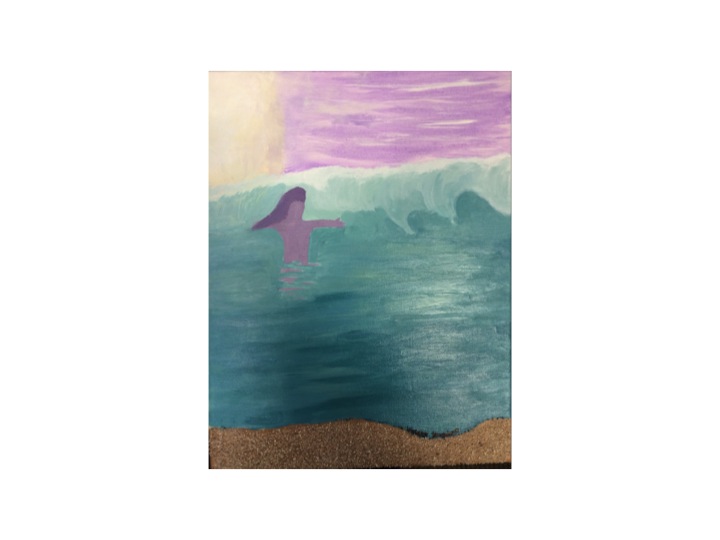
This was a painting in connection to Kashuo Ishiguro's novel Never Let Me Go. My student wrote: "I really enjoyed being creative and doing something I really enjoyed. I stayed up late some nights fixing and adding little things to try and perfect this piece. Getting the colors just right and trying to make it seem real was difficult because it’s paint and not easily erased. Even the imperfections on the painting make it beautiful, just like life itself. This is by far my favorite project I have worked on yet, and I believe if I was at Hailsham, this masterpiece would have been chosen to enter Madame’s Gallery."
Picture
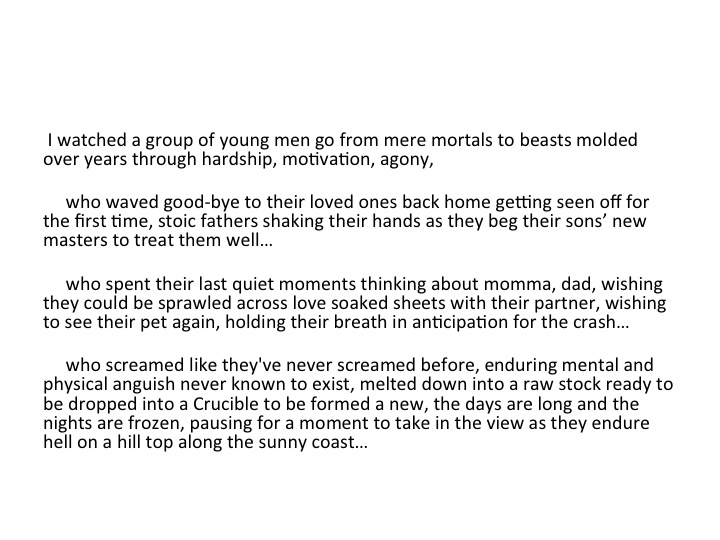
Here's an excerpt from a "Howl"-inspired imitation wherein the student expressed his life as a soldier. As the student said, "I was trying to capture four years of my life but barely got three months covered. I can now see why “Howl” is so long."

Multi-Author Conversation Project:
     I have also tried a group project which is a fun way to end the semester. I give the students a couple of days in class to work with their groups, and then they perform. The project requires that students think about what positions and personalities the authors would logically have, and it makes them reflect back on the works read and information learned. Most groups are quite creative and use contemporary references with humor. 

In groups of 3-4, you are going to join 3-4 authors in actual conversation with each other. Each person will assume the role of a particular author and speak as him or her. You can have them discuss a cultural/social or literary issue whether historical or contemporary (today’s society)—one that they could legitimately discuss even though you’re crossing the time/space continuum. It would be pretty hard to have Bierce and Williams (Am Lit) or Wordsworth and Yeats (Brit Lit) discussing Britney Spears, for example, but having female authors discuss her as possible feminist pop culture icon and their characters could work. What the authors say should analyze the issue and show what their actual perspectives were or would likely be based on what you know and have read by them. You can use examples and quotes from their works or each other’s works. Be creative but also show me that you’ve thought about these author’s works, their ideas, and relevant issues--and you’ve considered connections and applications based on that information.

You’ll present your conversation to the class by reading your script, which should not have speech by author A then speech by author B, etc. It should be a back and forth, speak and respond, conversation. Of course, memorization or extemporaneous speech is not necessary, but feel free to improvise if it comes to you! You will turn your “script” into me after you present it. (P.S. No acting skills are necessary although you should not read your script in monotone! But bringing a prop that would represent your author or setting would be fun or if you’re good at impersonations, have at it!) Your conversation should be 8-10 minutes long with all authors speaking around the same amount.

I will grade each person based on his or her author persona and on the overall conversation. Here are the specific elements I’ll be looking at:
  • Creativity & Effort
  • Analytical Thinking and Connections
  • Logical Content of Script
  • Knowledge of Author and Works
  • Flow of Script as a whole

     Who knows what will happen when Allen Ginsberg, Anne Sexton, and Mark Twain are together in an insane asylum, for instance, and the audience doesn't even realize where they are until the very end? Or how would gothic and supernatural writers from the 18th and 19th centuries (Radcliffe, Rossetti, Gaskell, and Stevenson) judge Twilight and Harry Potter? Those are examples of conversation scenarios that students have done. We have ended the semester with laughter each time! Frankly, they know that if they get me to laugh, that is a good sign!

I hope these assignments give you inspiration and ideas. Infusing creative writing into my literature surveys has been such a reward for my students and me.

Have you tried creative projects in your literature classes? Please share and let us know how they worked!
Next page
Last page
1 Comment

Teaching Glaspell's Trifles

5/23/2014

1 Comment


Picture
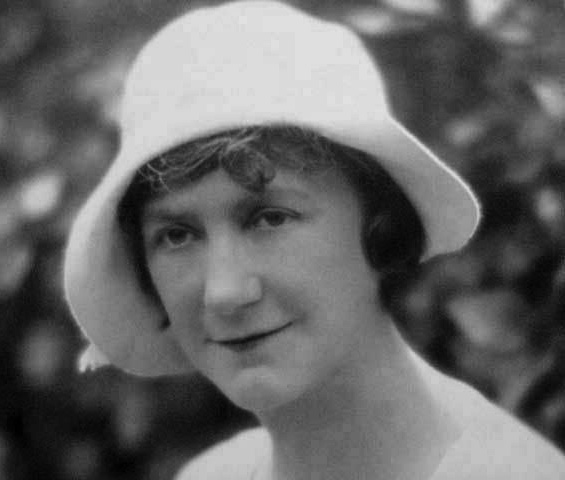
Susan Glaspell
Susan Glaspell's one-act play is a fantastic play to teach. It's not only short, so you don't have to devote a huge chunk of your syllabus to it, but also rich with symbolism and provocative in its assertions about justice and gender. Students usually end up have so much to say about the play.

Before I dive into anything, I want to share a heart warming anecdote from my experience teaching this play. After the final exam, one of my male students hung back to talk to me as I was collecting the exams and saying goodbye. He had a story that he wanted to tell me that he had been too embarrassed to share up until that moment. 

When he was studying for the exam, some friends of his drove to Davis from San Francisco to surprise him. He told them that he couldn't really hang out because he was studying for his English final, so they inquired about the material. When he told them that he was reviewing a play, they proposed that they act out the play together to help him study. So, they had a few beers together, and proceeded to stage an impromptu, private performance of Trifles.

If that wasn't adorably dorky enough--apparently, they got REALLY into it, and by the end of the play, all three boys were in tears thinking about poor Mrs. Wright and what she must have been going through to have gotten to the point where she snapped and killed her abusive husband. They were so worried about her and whether she would have to face consequences that her husband would never have had to face.

!!!!!

How amazing is it that three young men (hopefully all 21 by this time since they were probably also pretty drunk) spent their weekend together bonding over Trifles and thinking deeply about the ways that the justice system can be skewed toward the people who are already in power? God, being a teacher is the best job ever. That student, by the way, aced his final exam.

Onward to teaching strategies!
So this is another installment of "My Smart Friends," because I have lots of ideas to share with you that come from my friend Tiffany Gilmore, who is a general bad-ass. She is wicked-smart, hilarious, and generous; and she runs the full gamut between irreverently dirty-minded and pristinely proper--the type of lady who could make men blush at a hockey game and then turn around and whip up pistachio macarons that cause Martha Stewart to feel a deep sense of shame because she's been doing wrong all these years.
Picture
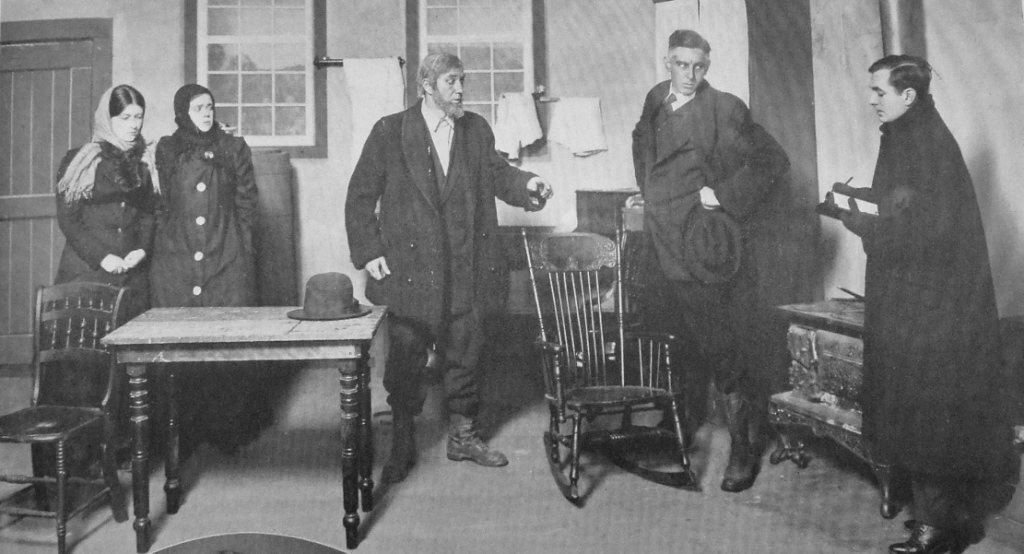
Original performance of Trifles, with Marjorie Vonnegut, Elinor M. Cox, John King, Arthur E. Hohl, and T.W. Gibson, from The Theatre, Jan. 1917. (From the Billy Rose Theatre Collection, New York Public Library at Lincoln Center)
The image above is one that Tiffany recommend to me, which you can find on the website for the Susan Glaspell Society. That site, by the way, is a treasure for information about Glaspell and criticism on her works. The photograph is from the first performance of the play, and Tiffany uses it as a spring board into discussion about the play itself. Here's what she has to say about the activity:
I have students read the image before we move into a discussion and I'm always surprised how well that activity goes; someone always gets reading the body language of men taking up space and being important and the women looking down, folded in on themselves in the background as well as the starkness and cold of the setting.
Tiffany also has a paper prompt that puts Trifles in dialogue with Williams' The Glass Menagerie, which I will share in a future post.

Tiffany recommends also starting with an in-class writing prompt for the first 10 minutes of class: are the women justified in hiding their findings from the men, why or why not? This generates a really good discussion on justice, versus morality etc. 

Both Tiffany and I have had the experience that e
ach term some students are adamant that withholding information is absolutely illegal because someone was murdered and some think that--while not exactly legal-- it is at least understandable because Mrs. Wright was at the very least emotionally abused, and her alibi is so weak, that she will probably be found guilty anyway.

I like to hold a mock trial for Mrs. Wright
, using as "evidence" passages from the play itself--this is good for their papers because students start gathering textual evidence immediately. I divide the classroom into two: a prosecution side that argues for the charge of first degree murder with a death penalty sentence and a defense side that can either argue for innocence ("not guilty by reason of insanity") or for a lesser crime like manslaughter. I usually act as judge, but it could be cool to assign an actual jury in the classroom along with a student judge.

My activity differs from Tiffany's because she's asking students to judge Mrs. Peters and Mrs. Hale whereas I am asking students to judge Mrs. Wright. We might then go to the next logical step and ask students to consider if there is anyone or anything else that we could or perhaps should be judging. Who or what is really on trial in this play?
Next page
Last page
1 Comment
<<Previous
Forward>>

    Claire Dawkins

    English Instructor at Stanford's Online High School

    Archives

    August 2015
    May 2015
    October 2014
    September 2014
    June 2014
    May 2014
    April 2014

    Categories

    All
    Assignments
    Beaumont
    Behn
    Beowulf
    Bishop
    Brathwaite
    Cartier-Bresson
    Chaucer
    Coleridge
    Creative Writing
    Dickinson
    Donne
    Early American Literature
    Exams
    Gender Theory
    Genre
    Glaspell
    Horace
    John Smith
    Lesson Plans
    Literature Of Exploration
    Melville
    Milton
    My Smart Friends
    Ovid
    Pearl Poet
    Pynchon
    Queen Elizabeth I
    Rowlandson
    Shakespeare
    Sophocles
    Spenser
    Sterne
    Texts And Contexts
    Theory
    Visual Analysis
    Walker
    Whitman
    Williams
    Woolf
    Writing Instruction

    RSS Feed

Proudly powered by Weebly